Post-Consumer Plastic Film Recycling Under the EU PPWR
On August 12, 2026, the EU Packaging and Packaging Waste Regulation (PPWR, EU 2025/40) officially began to apply. The regulation covers all packaging placed on the EU market, regardless of its country of origin or material type. Its scope includes food and consumer packaging, e-commerce packaging and transport packaging, while introducing relevant requirements for manufacturers, importers, distributors and other economic operators. Specific obligations will be implemented according to the timelines established in the regulation.
For the plastic packaging industry, the PPWR not only affects packaging design and material selection but also encourages the recovery and recycling of packaging waste. Plastic films are widely used in product packaging, logistics, agriculture and industrial applications. Their lightweight, moisture-resistant and protective properties make them practical packaging materials. However, as consumption continues to increase, growing volumes of post-consumer plastic film waste are also being generated. Without effective collection and treatment, these materials can increase waste management pressure and potentially enter the natural environment.
As a result, converting used plastic films into reusable raw materials has become an important challenge for packaging manufacturers and recycling companies.
The Importance of Washing in Post-Consumer Plastic Film Recycling
Mechanical recycling remains one of the main methods for processing plastic films. The process generally involves shredding, washing, dewatering, drying, extrusion and pelletizing, converting discarded films into recycled plastic pellets for use in new plastic products, depending on their material properties.
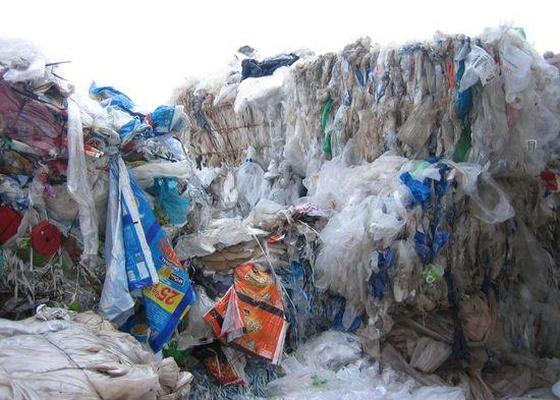
Unlike clean production offcuts generated during industrial manufacturing, post-consumer plastic films are often more heavily contaminated. Waste films collected from household waste, retail packaging and agricultural applications may contain soil, dust, oil, food residues, labels and other impurities. If these contaminants are not effectively removed, they can affect extrusion stability and reduce the quality of the recycled pellets.
This is particularly important for manufacturers intending to reuse recycled plastics in film blowing applications. Feedstock purity, impurity levels and processing consistency all influence the performance of recycled materials. Simply shredding and pelletizing waste films does not guarantee that the resulting pellets will meet downstream application requirements. Washing quality is equally important in determining the final material quality.
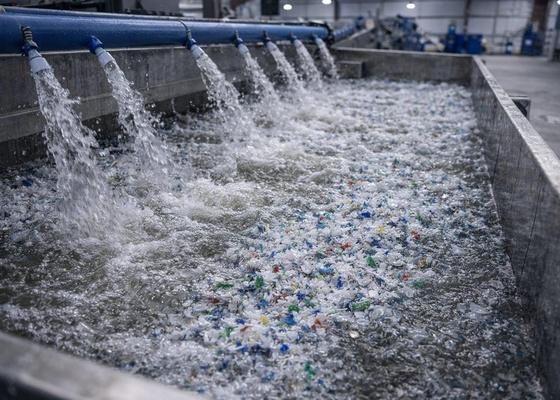
A properly configured washing process can combine pre-washing, friction washing, rinsing and dewatering to progressively remove surface contaminants and improve flake cleanliness. Since plastic films from different sources vary in contamination levels, moisture content and material composition, the washing line must be configured according to the actual feedstock. This helps maintain cleaning performance while controlling water, electricity and other operating costs.
GREENMAX Plastic Film Washing Technology and Integrated Recycling Solutions
To address the contamination challenges associated with post-consumer plastic films, GREENMAX continues to develop and optimize film recycling technologies, drawing on INTCO Recycling's experience in plastic recycling and approximately eight years of film washing and production operations at its Malaysia facility.
Building on this operational experience, GREENMAX has developed high-speed centrifugal washing technology to improve the removal of contaminants from post-consumer plastic film surfaces.
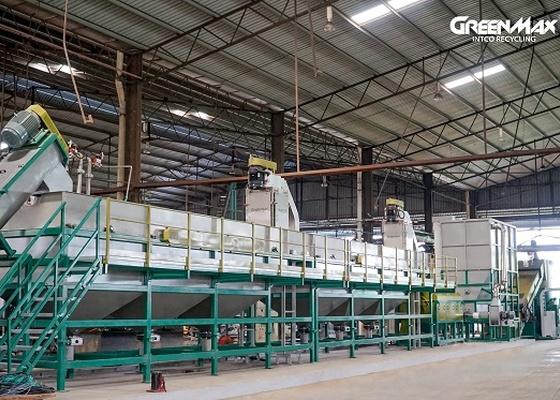
GREENMAX's independently developed film washing line integrates inclined friction washing, vortex washing and high-speed horizontal dewatering technologies. Through multiple washing and dewatering stages, the system helps remove soil, oil residues and other contaminants attached to plastic films. According to GREENMAX's existing process test results, the cleanliness of certain post-consumer film materials can reach over 98% under suitable feedstock and processing conditions. Actual results depend on contamination levels, material composition, equipment configuration and operating parameters. Meanwhile, the production line optimizes water circulation and equipment operation to help reduce water and electricity consumption while improving overall processing efficiency.
After washing and drying, the clean plastic flakes can be transferred to a dedicated film extrusion and pelletizing line. Through melting, filtration, extrusion and pellet cutting, the processed flakes are converted into recycled plastic pellets. Depending on feedstock quality, pellet properties and downstream formulation requirements, these pellets can be used in film blowing and other plastic manufacturing applications, creating a recycling route from post-consumer films to reusable plastic raw materials.
GREENMAX also provides plastic waste densification, baling, shredding and dewatering equipment. Businesses can select individual machines according to their material types, contamination levels, processing capacity and intended applications, or combine different machines into a continuous production line. The available plastic recycling equipment can be configured according to individual project requirements, with EPC turnkey solutions available for complete recycling facilities.
Advancing Plastic Film Recycling Towards a Circular Future
As packaging regulations such as the PPWR continue to take effect, plastic packaging businesses need to pay greater attention not only to material design and usage requirements but also to the collection, treatment and recycling of packaging waste. Mechanical recycling provides an established route for recovering plastic films, while continuous improvements in washing, dewatering and pelletizing technologies will further influence the quality and applications of recycled materials.
Clean plastic flakes can be further processed into reusable materials through suitable extrusion and pelletizing systems. GREENMAX plastic pelletizing systems provide downstream processing options for converting recovered plastic materials into recycled pellets, depending on feedstock characteristics and final product requirements.
Plastic film recycling is not an unsolvable challenge. The key is to identify the right processing method for each type of feedstock. Whether the goal is to improve flake cleanliness, reduce energy consumption or establish a complete film washing and pelletizing line, GREENMAX can recommend suitable equipment configurations and technical solutions based on material type, contamination level and target processing capacity.
If you are looking for an efficient, energy-saving or high-cleanliness plastic film recycling solution, contact the GREENMAX technical team with your material type, contamination conditions and processing requirements. Our team can help evaluate a suitable recycling solution for your business.